


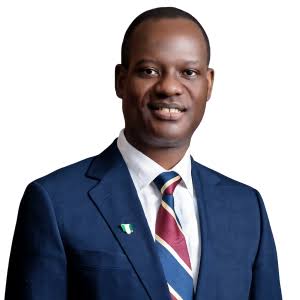
NKECHI NAECHE-ESEZOBOR (BANGKOK,THAILAND)– The Nigeria’s Minister of Finance and Coordinating Minister of the Economy, Mr. Taiwo Oyedele, has warned that artificial intelligence (AI) could produce growth without employment.
Speaking at Nigerian Press Briefing held at the ongoing 2026 World bank Group/ IMF Annual meeting held in Bangkok, Thailand, Oyedele, called on Bretton Woods institutions to measure success by jobs created, not only by growth recorded.
Citing figures the World Bank presented at Friday’s plenary, Oyedele said about 1.2 billion young people will enter the global job market over the next 10 to 15 years, while current trends point to only about 400 million jobs being created. “That would leave some 800 million young people without adequate work.”
He noted that Africa has the world’s youngest population and Nigeria is at the centre of that shift, so planning must start now.
According to him AI will raise productivity, which Nigeria welcomes, but the risk of jobless growth is “very high.” Regions that moved from low to middle income did so through labour-intensive manufacturing and services, he said, while automation is narrowing those paths, starting with the back-office and service work that young graduates rely on to move up.
“We will not receive the technology; rather, we will shape how it is adopted,” he said.
He outlined skills, Job-intensive investment and Development-friendly rules as three part-response.
Oyedele said Nigeria’s response to AI rests on three things: skills so young people work with AI rather than being displaced by it, investment and incentives that favour job-heavy sectors, and rules that ensure AI’s gains are fairly taxed and shared while African data builds African capability.
On subsidy, he said investors, rating agencies and multilateral institutions repeatedly asked whether Nigeria is reversing its reforms. “Let me be clear: there will be no return to fuel subsidies or multiple exchange rates,” he said.
He described the recent retail margin discount by the NNPC as a time-bound commercial decision to reduce margins and support Nigerians, not a subsidy paid from public funds.
As part of the G24, he called for a quota-based IMF that protects the voice of developing and vulnerable countries, more transparent credit rating networks, deeper local currency markets and affordable climate finance.
He said natural gas remains Nigeria’s transition fuel and climate finance must be flexible for countries at different stages of the energy transition.
Citing the United Nations Economic Commission for Africa (UNECA), he said developing countries pay about $500 billion a year more to borrow than advanced economies.
He called the risk premium a “prejudice premium” that often bears little relation to fundamentals, and said credible policy should be rewarded with cheaper capital.
Leaving Bangkok “with confidence, but not complacency,” he said stability was the first test and growth that employs Nigerians is the second.
The task now, he said, is to turn international confidence in the reforms into investment, cheaper financing, faster growth and decent jobs.