



BY NKECHI NAECHE-ESEZOBOR—The ballroom lights in Lagos softened as applause swelled into a standing ovation. It was not just the end of an evening—it was the closing chapter of a remarkable corporate journey.
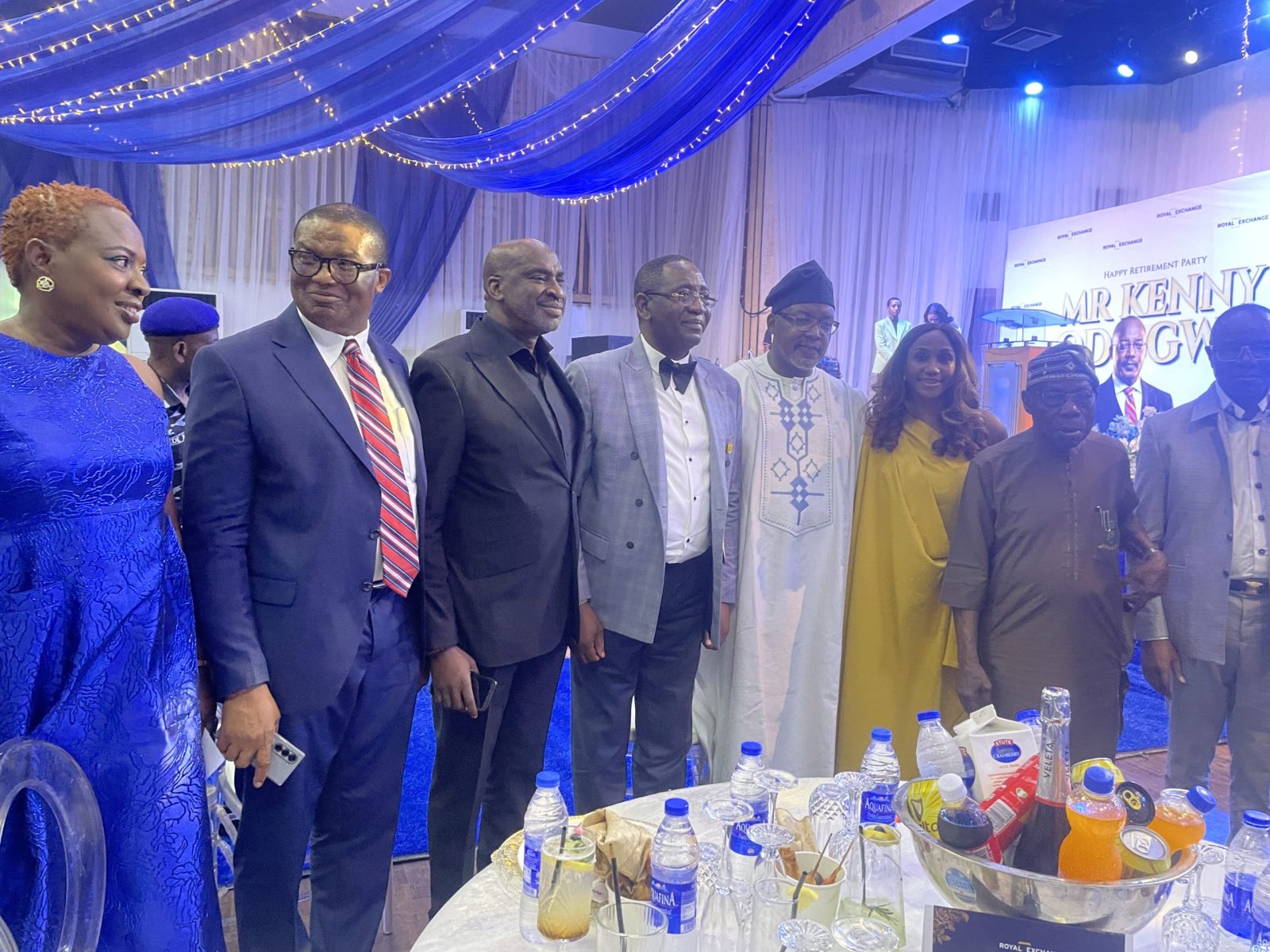
At the center of it all stood Kenny Ezewani Odogwu, a man whose nearly two decades at the helm of Royal Exchange Plc had quietly shaped one of Nigeria’s oldest financial institutions. The occasion was his retirement celebration, but the mood felt less like a farewell and more like a tribute to a legacy that would outlive the night.
Among those who gathered to honor him were towering figures in Nigeria’s public and private sectors. Former President Olusegun Obasanjo, known for his measured words, reflected on Odogwu’s steady hand during uncertain economic times. He spoke not just of balance sheets and boardrooms, but of influence—how Odogwu’s approach to governance and wealth creation rippled beyond the insurance industry into the broader national conversation.
Nearby, Lagos State Governor Babajide Sanwo-Olu leaned into a theme that resonated deeply with the city’s ambitions. He described Odogwu as a quiet architect of stability, someone whose leadership helped sustain the kind of business confidence Lagos needs to fulfill its vision as a global financial hub. In a city that never stops moving, Odogwu had ensured that at least one institution remained steady.
There was also a nod from Ibe Kachikwu who praised Odogwu’s broader contributions to the economy—bridging sectors and reinforcing the often-overlooked importance of insurance in national development.
But perhaps the most personal reflections came from within the company itself. Idu Okeahialam, the Group Managing Director, spoke with the warmth of someone who had witnessed the leadership up close. She painted a picture of a man who led not with noise, but with clarity—someone who brought calm in uncertainty and direction when it mattered most.
To her, Odogwu’s legacy was not defined by the 19 years he spent as chairman, but by the standards he set. Standards of integrity, discipline, and long-term thinking—qualities that, in today’s fast-changing financial landscape, feel increasingly rare.
As the evening unfolded, stories of his tenure blended with laughter, gratitude, and quiet admiration. There were no grand gestures needed to underscore his impact; it was evident in the respect that filled the room.
Outside, Lagos pulsed with its usual energy. Inside, however, time seemed to pause—long enough for colleagues, leaders, and friends to acknowledge a simple truth: institutions may endure, but it is people like Odogwu who give them character.
When the applause finally faded, it left behind something more lasting than sound—a shared recognition that while his chairmanship had ended, his influence would continue to guide the path ahead.