


BY NKECHI NAECHE-ESEZOBOR—When Dr. Aminu Maida took the helm at the Nigerian Communications Commission (NCC) in October 2023, he stepped into a challenging landscape marked by soaring operational costs and stubborn infrastructure gaps.
Yet, over the past few years, the commission has successfully turned these hurdles into stepping stones, steering Nigeria’s telecommunications sector toward a new era of steady growth and digital inclusion.
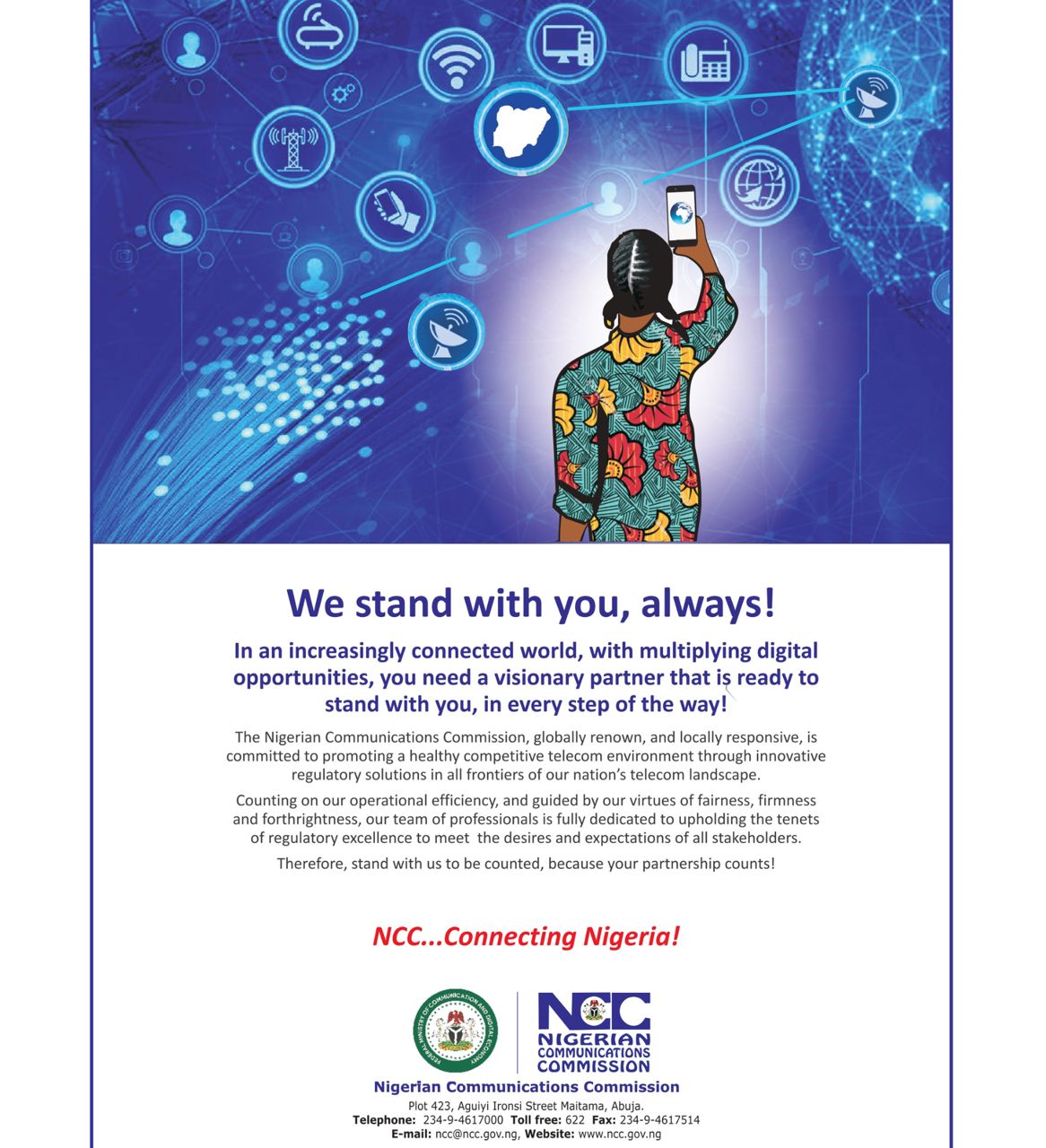
At the heart of the NCC’s recent success is a massive push to bring reliable phone and internet access to everyday Nigerians, especially those in rural and underserved communities.
By 2025, these deliberate efforts pushed the country’s internet broadband penetration rate to an impressive 48.81 percent, while teledensity—the percentage of the population with telephone connections—reached 79.65 percent.
Industry experts note that this rapid expansion didn’t happen by accident; it is the direct result of the regulatory stability and clear, reliable policy direction the NCC has established.Beyond simply expanding networks, the commission has taken aggressive steps to protect them.
In a major victory for the industry, the NCC actively championed a Presidential Executive Order that officially designates telecom facilities as Critical National Infrastructure.
This critical legal shield gives the government the teeth to fight back against the theft, vandalism, and sabotage that have long plagued network operators, disrupted daily services, and driven up business expenses.
Financially, the NCC has proven to be a vital engine for the nation’s economy. In the 2024 fiscal year alone, the commission generated roughly N195.8 billion through spectrum fees, operating licenses, and other regulatory revenues.
Proving its commitment to national development, the NCC sent more than N111 billion of those earnings straight into the Federal Government’s Consolidated Revenue Fund.
Looking toward the future, the NCC is also reshaping how technology businesses operate in Nigeria. The commission has introduced discussions for a fresh General Authorisation Framework alongside updated licensing systems. This modern approach is designed to cut through red tape for tech startups, welcome innovative business models, and make it much easier to deploy next-generation digital tools.
Ultimately, the NCC has managed a delicate balancing act. Even while navigating tough economic pressures like inflation and rising business expenses, the commission has successfully maintained investor confidence through open, transparent communication with network operators.
At the same time, it has kept its focus squarely on everyday citizens by strictly monitoring service quality and creating tools that help ordinary phone subscribers check network performance, ensuring that Nigeria’s digital future remains both strong and consumer-friendly.