




BY NKECHI NAECHE-ESEZOBOR—The National Pension Commission (PenCom) has called on Small business owners in Nigeria to adopt sound financial management practices, reinvest part of their profits into their enterprises, fulfill their obligations to employees and plan early for retirement to ensure long-term business sustainability.
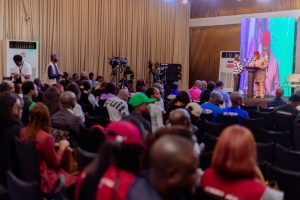
This call was made by the Director General, PenCom, Omolola Oloworaran, at the day two of ongoing National Pension week held in Lagos, with the theme “Inclusion Day (SME Fair)”

She highlighted the importance of small businesses to Nigeria’s economy, particularly their contributions to job creation, skills development, local production and distribution, innovation and economic activities in communities across the country.
The DG who was represented by Samuel Chigozie Uwandu, Commissioner, Inspectorate,emphasised that small businesses are more than commercial ventures, describing them as sources of livelihood for families, providers of employment and avenues for people who might otherwise struggle to enter the formal labour market.

She noted that behind every small business are individuals and families who make daily sacrifices, take risks, solve problems and work to build a better future despite challenging business conditions.
According to her the contributions of entrepreneurs deserve recognition, alongside practical support from institutions, policymakers and development partners to create an enabling business environment and expand opportunities for growth.
She stressed that the success of a business should not be measured solely by its ability to survive from day to day, but by its capacity to grow, withstand economic difficulties, create opportunities for others and provide lasting financial security for its owner.
To achieve this, entrepreneurs were encouraged to move beyond survival-oriented operations and embrace deliberate planning for growth and sustainability.

Key practices identified include proper record-keeping, financial discipline, separating personal finances from business funds, maintaining good customer relations, improving operational efficiency and responsibly managing income and expenditure.
Business owners were also encouraged to reinvest a reasonable portion of their profits into their enterprises.
Such reinvestment, the address noted, could help businesses acquire better equipment, improve technology, expand stock, train employees, enhance service delivery and reach new markets through advertising.
However, it acknowledged the need to balance reinvestment with the legitimate personal and family needs of entrepreneurs, stressing that the objective is to strike a sustainable balance between present needs, business expansion and future financial security.
She further stressed that business growth comes with increased responsibilities, noting that a stronger enterprise should be judged not only by its profitability but also by how it treats employees, meets its obligations and contributes to society.
She reminded Business owners of their responsibilities to pay applicable taxes and fulfil relevant statutory obligations, while governments were urged to provide an enabling environment for businesses to operate and grow.
She also called on employers to treat their workers fairly by paying salaries on time, providing safe working conditions and complying with applicable pension and tax requirements.
Employees, she noted, are not merely a cost of doing business but partners whose knowledge, skills, experience and commitment contribute directly to the success of an enterprise.
She called for timely remittance of employees’ pension contributions in accordance with applicable laws.
She warned that delayed or unremitted contributions could undermine workers’ retirement security and weaken confidence in the pension system.
She described pension compliance as more than a regulatory requirement, presenting it as a responsibility that reflects respect for employees and recognition of their contributions to business success.
She observed that many entrepreneurs devote their most productive years to building their businesses, working long hours, reinvesting earnings, supporting their families and creating employment opportunities, while giving insufficient attention to their retirement plans.
She challenged business owners to consider how they would sustain themselves financially if their businesses experienced prolonged downturns, circumstances prevented them from continuing to work or they eventually needed to hand over responsibility to the next generation.
She therefore encouraged entrepreneurs to develop a savings culture, prepare for unexpected events, separate retirement savings from business working capital and explore appropriate pension and long-term savings arrangements.
“For self-employed Nigerians and those operating in the informal sector,she identified the Personal Pension Plan (PPP) under the contributory pension framework as an option for eligible individuals to build retirement savings.
“Business owners are encouraged to seek guidance from licensed Pension Fund Administrators (PFAs) and other relevant pension operators when considering appropriate arrangements.
The commission emphasised that retirement planning should begin while entrepreneurs are still actively earning, allowing them to build savings over time and strengthen their financial resilience.
It argued that business owners should aspire to retire with dignity rather than depend entirely on the continued operation of their businesses or financial support from family members.
The commission however called for stronger businesses, responsible business practices, protected employees, sustainable economic development and a more secure future for entrepreneurs and their families.
Participants were encouraged to engage constructively, share practical experiences, identify workable solutions and commit to actions that could make a measurable difference in the lives of Nigerian entrepreneurs and their employees.