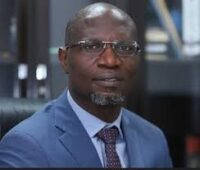

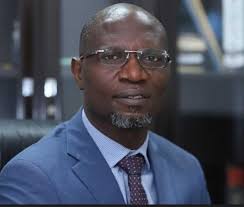
The Director-General of the Securities and Exchange Commission (SEC) Nigeria, Dr. Emomotimi Agama, has solicited the collaboration of all stakeholders in the nation’s financial system in its current regulatory drives aimed at fully exploring the potential of the investment space for sustainable development of the country.
The SEC Boss, who made the appeal in his keynote address delivered at the Emerging Africa Capital Limited Investor Summit & Awards event with the theme “Deploying and Mobilizing Capital and Investment Strategies in a Shifting Global Economy”, noted that recent reforms initiated by the commission to transform the capital market were achieving desired results but stressed that a collective approach in pushing them would help in positioning Nigeria as a leading investment landscape in the global space.
Agama, who elaborately highlighted the implications of the current macroeconomic uncertainties in the global economic order for all economies globally, pointed out that while some countries remained the choice of many investors now due to quick returns opportunities, in the long run countries like Nigeria would offer longer benefits in view of their huge but yet to be fully explored opportunities.
According to him, Nigeria’s capital market has demonstrated considerable resilience in the face of the headwinds as the regulatory reforms, including the introduction of electronic offerings, the deepening of the bond market, the expansion of alternative investment platforms, and the SEC’s engagement with sustainable finance principles have begun to bear fruit in attracting renewed investor interest, indicative of a market in active evolution.
Despite the feats, the Director-General admitted that the full potential of what the capital market can do for Nigeria’s development had not yet been fully unlocked as the market capitalization, relative to GDP, remained below the benchmarks of Nigeria’s peer economies, while retail investor participation is still too thin and derivatives market is at its nascent stage.
To translate the potential to real gains for investors and the nation’s economy, Agama advocated collective responsibility since the capital market cannot be single-handedly built by regulators, exchanges or by investors alone, pointing out that its strength lies in stakeholders playing their roles with integrity, competence, and long-term orientation.
Specifically, he advised domestic corporate issuers to embrace the capital market as their primary pathway to growth financing by improving governance, sharpening disclosure, and building the investor relations capabilities that attract institutional capital.
He assured: “The market rewards quality, and the companies that invest in quality today will access capital on terms that compound their competitive advantage.”
This is even as he urged domestic institutional investors, particularly pension fund administrators and insurance companies to deepen their engagement with domestic capital market instruments, to participate actively in the price discovery process, and to develop the analytical capacity to invest confidently across asset classes and geographies as Nigeria’s savings pool is a resource of enormous strategic significance.
Similarly, the SEC boss assured foreign investors and development finance institutions that Nigeria remained open for investments as the SEC continued to create a regulatory environment that is principles-based, transparent, and aligned with international best practices.
The Director-General also appealed to his colleagues in the Central Bank of Nigeria (CBN), Debt Management Office(DMO), National Insurance Commission (NAICOM), the Pension Commission (PenCom), and other relevant agencies tocontinue to deepen inter-agency collaboration, harmonize our policies, and present a unified, investor-friendly face to the world as the sophistication of the nation’s capital market depended on the coherence of their regulatory frameworks.
On the promise of capital deployed with purpose, Agama said: “The history of economic development is, at its core, the history of how societies have organized the deployment of capital. The nations and peoples that have built great economies have done so not simply because they were endowed with resources, but because they developed the institutions, the instruments, and the discipline to channel those resources toward their highest and most productive uses.
“Nigeria stands at an inflection point. The global economy is shifting in ways that create both significant risks and significant opportunities for an emerging market of our scale and potential. The decisions we make — individually as investors and collectively as a financial community — in the next three to five years will determine whether we capture the upside of this moment or allow it to pass us by”, he added.