

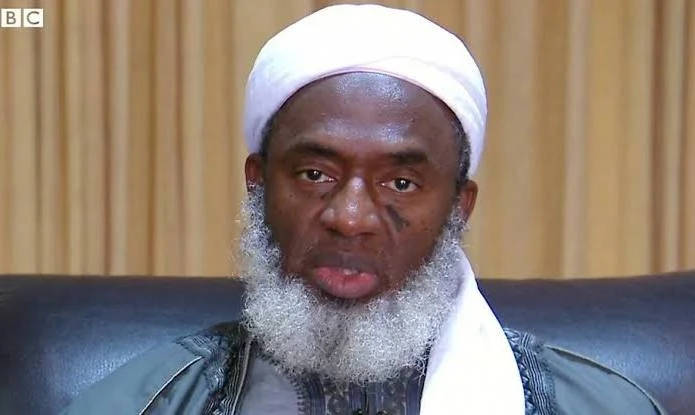
Sheikh Ahmad Gumi, a controversial Islamic cleric, has claimed that security sources informed him he was listed for elimination after his name allegedly surfaced during a high-level national security meeting in Abuja.
According to Gumi, the information was conveyed to him through an early-morning phone call from an unnamed source, who warned that he had been identified as a Boko Haram figure and marked for assassination.
They called me from Abuja and told me there was a security meeting. They said I have been marked, that I will be eliminated. And who are Boko Haram?” Gumi queried.
According to the cleric, the caller told him that his name was among those allegedly identified for assassination.
He questioned the narrative surrounding terrorism, suggesting that global powers were responsible for the emergence of insurgent groups.
“Even Americans said they came to fight terrorists, so who are the terrorists? They are the ones,” he said, accusing the United States of playing a role in the rise of Boko Haram.
Gumi further alleged that Nigeria’s worsening insecurity and social divisions were fueled by foreign influence, policies and narratives he attributed to United States President Donald Trump.
He claimed that Nigerian political and religious leaders failed to speak out as the country slid deeper into crisis.
According to him, foreign-backed funding and narratives falsely portrayed Christians as the sole victims of insecurity, deliberately sowing division among Nigerians and deepening mistrust between communities.
“Because of lies, you brought violence. But where are the leaders? What did they do? What about the scholars? Everyone has gone to hide in their corners.”
The cleric argued that no sovereign nation would accept external interference designed to divide its people along religious or social lines, warning that such actions undermine national unity.
“Which country would agree to bring something in just to divide its people? Either you bring all of us together, or you hold us and hand us over to them.”
Gumi accused political and religious elites of abandoning meaningful dialogue, leaving Nigerians with what he described as “noise” instead of solutions, while hardship, oppression and denial of rights continued to worsen.
He warned that fear, silence and division were dragging the country deeper into crisis, stressing that continued inaction by leaders and clerics would further compound Nigeria’s challenges.
“This is the kind of situation we are in. It is dragging the country down,” he added.