



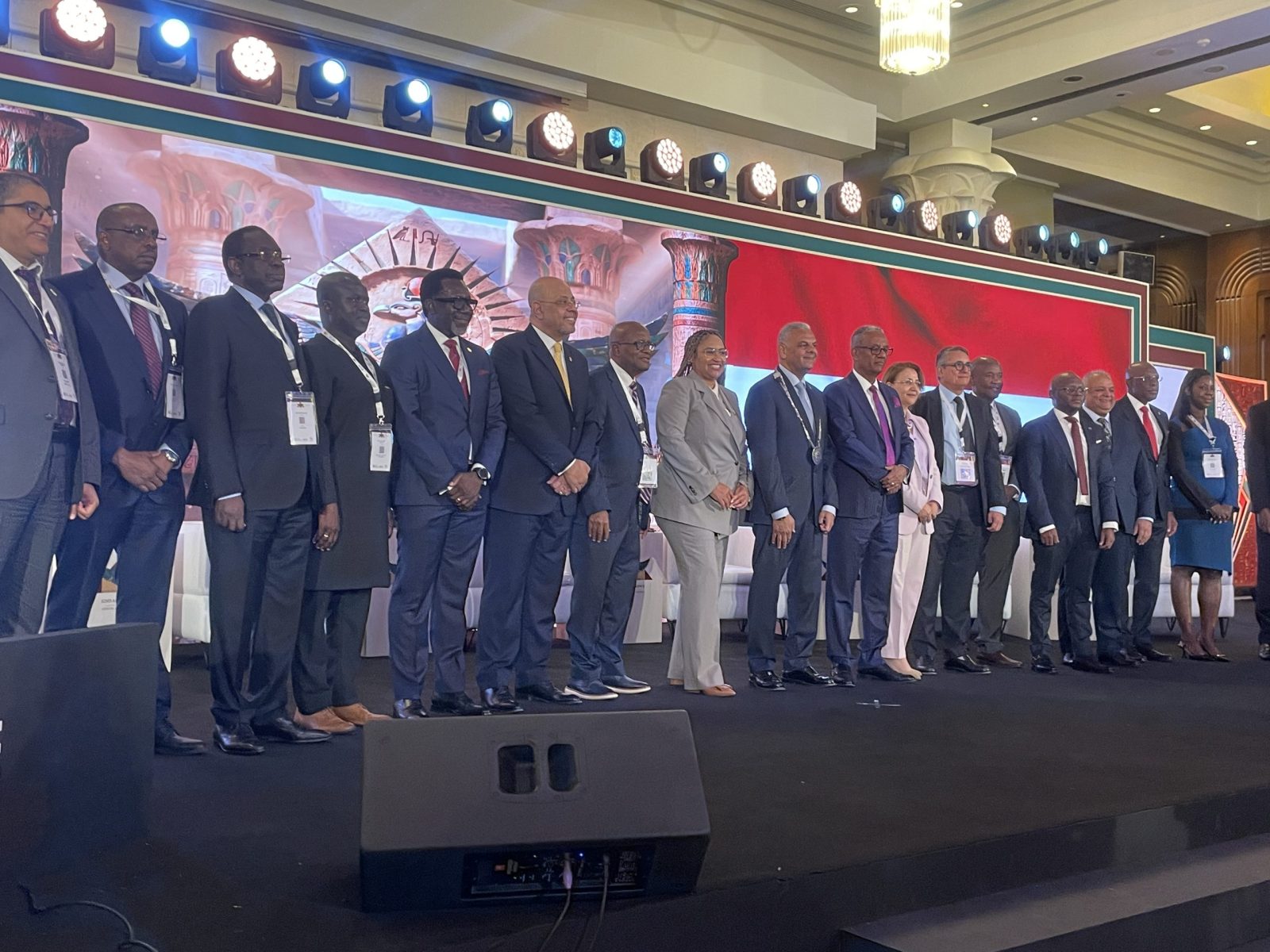
BY NKECHI NAECHE-ESEZOBOR—Government, trade, and financial leaders at the 52nd annual conference of the African Insurance Association (AIO) have called for a sweeping overhaul of the continent’s insurance framework, positioning structural risk-management as the ultimate catalyst for African industrialization.
Speaking under the event’s central focus on economic development, regional leaders argued that Africa cannot successfully scale up its manufacturing value chains or transition away from exporting raw commodities without building a robust, domestic infrastructure for risk absorption.
Delivering the keynote paper, Kanayo Awani, Executive Vice President of Intra-African Trade and Export Development at Afreximbank, highlighted the stark reality facing the continent’s industrial ambitions. Across most of Africa, insurance penetration remains frozen at just 2% to 3%, compared to a global average of 6.8%. Furthermore, Africa’s entire continental reinsurance market accounts for a mere 1.6% of the global total.
Awani stressed that these deficits are directly choking industrial expansion, resulting in delayed infrastructure projects, higher financing costs, and a problematic status quo where too much African risk is ceded to foreign markets.
“Research shows the strong link between higher insurance penetration and higher manufacturing value-added per capita,” Awani said. “Put simply, if a country has industrialized, it means it has learned to manage its own risk.”
To support the industrial goals of the African Continental Free Trade Area (AfCFTA), which spans 1.5 billion people and a combined GDP of $3.4 trillion, Awani called on policymakers to view insurance as a fundamental pillar of trade and project finance rather than a peripheral service.
She noted that the continent faces an annual infrastructure funding deficit of nearly $90 billion. To bridge this gap, she urged global and regional insurers to mobilize their balance sheets, noting that directing just 0.5% of the world’s $42 trillion in insurance assets toward African infrastructure would transform the continent’s industrial capacity.
The conference also highlighted how national-level regulatory reforms can successfully unlock capital for broader economic growth. Mahmoud Farid, Egypt’s Minister of Investment and Trade, speaking on behalf of the Prime Minister, detailed Egypt’s recent four-year regulatory overhaul.
Farid pointed to a previously controversial mandate by Egypt’s Financial Regulatory Authority (FRA) that forced insurance companies and private pension funds to invest a strict minimum percentage into listed equities. While initially met with industry pushback, Farid revealed the strategy has successfully energized local capital markets. Thanks to the influx of institutional insurance capital, Egypt is now preparing for four to five new private sector Initial Public Offerings (IPOs) alongside major state Listings like Misr Life Insurance.
By tightening governance, driving digitization, and mandating equity investments, Egypt’s reforms demonstrated how a structured insurance sector can directly feed the wider financial ecosystem required for industrial investment.
Reinforcing the social necessity of these economic strategies, Egypt’s Deputy Minister of Foreign Affairs for African Affairs, H.E. Mohammed Abu Bakr, concluded that a strong insurance and reinsurance network ensures that individual citizens and businesses do not have to shoulder the volatile risks of economic transformation alone.