

BY NKECHI BAECHE-ESEZOBOR—(Bangkok, Thailand)— The International Monetary Fund (IMF) has urged governments to repair their public finances “before the cracks widen,” warning that rising borrowing costs in advanced economies are putting pressure on emerging and low-income countries.
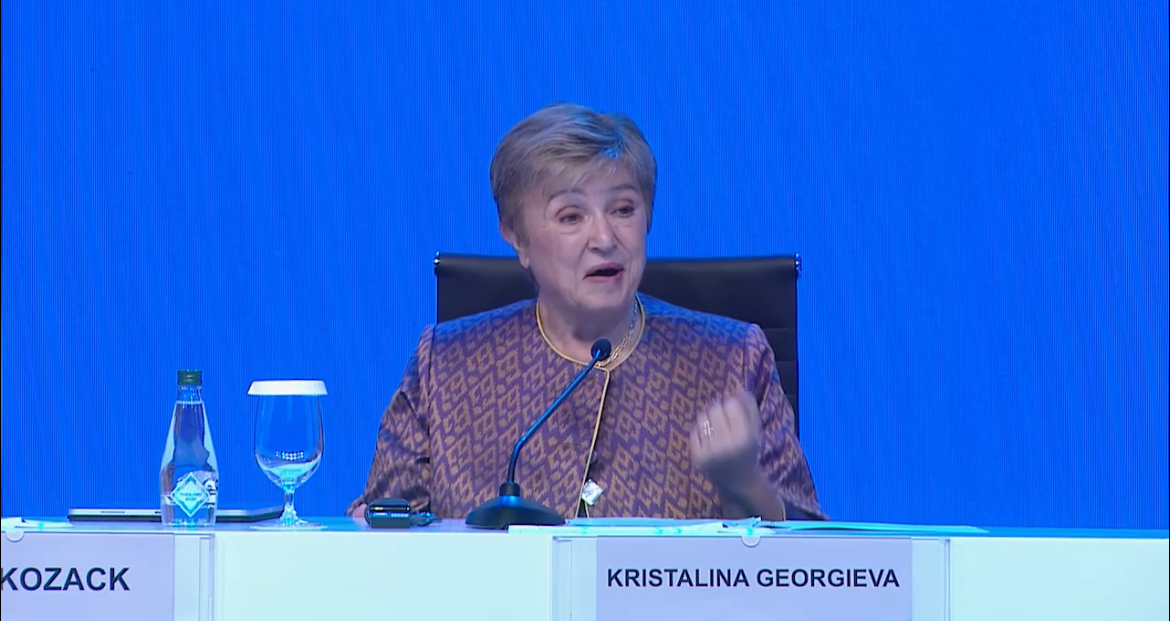
Speaking at a press briefing in Thailand today, IMF Managing Director Kristalina Georgieva said yields in advanced economies have climbed to multi-decade highs since the April meetings.
“It linked this to persistent inflation, stronger investor demand, higher expected growth tied to artificial intelligence (AI) and weak fiscal fundamentals.”
Many countries, it said, failed to use the post-pandemic recovery to rebuild fiscal buffers, and each new shock has pushed debt higher. This time, it said, advanced economies are the worst offenders.
Higher benchmark yields are spilling over to emerging markets and low-income countries, raising their debt-servicing costs. The IMF said many of these countries have strengthened their policy frameworks and institutions, but now face costlier fuel and food and weaker investor appetite for riskier assets. Some hard-won gains could be lost.
The Fund said low-income countries and fragile and conflict-affected states, especially energy importers and those left out of the technology boom, are taking the biggest hit. Energy exporters not affected by conflict, and supply-chain economies in Asia such as Thailand, Malaysia, Korea and Singapore, are faring better.
The IMF called on governments to raise revenues, rationalise spending and improve public financial management. As energy and food prices rise, it said, they should “protect people, not prices” through temporary, targeted support for the most vulnerable while preserving price signals.
On monetary policy, it urged central banks to stay focused on price stability. The case for tightening is strongest where inflation is above target and economic activity is strong, it said, adding that a prudent hawkish bias may be appropriate in many countries.