




BY NKECHI BAECHE-ESEZOBOR( BANGKOK, THAILAND)—The Central Bank of Nigeria Governor Olayemi Cardoso and Finance Minister Taiwo Oyedele have said bringing inflation down to single digits is a priority, with the minister saying it would save the fiscal side more than $10 billion on 2026 numbers.
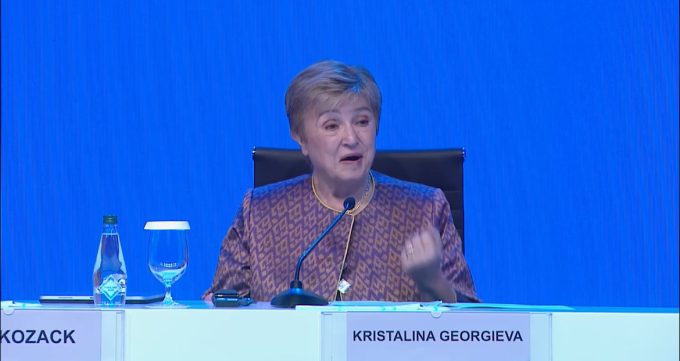
Both federal government team spoke on Wednesday at an investors’ engagement on the sidelines of the 2026 IMF-World Bank Annual Meetings in Bangkok, Thailand
Oyedele, who is also Coordinating Minister of the Economy, said lower inflation would create conditions for single-digit interest rates. He said monetary authorities are pivoting to an inflation target, which makes collaboration between monetary and fiscal authorities more important than ever.
Cardoso said the bank has made single-digit inflation its medium-term target because inflation is among the heaviest burdens on the poor. He said inflation has fallen from about 34 to 35 per cent to about 15 per cent, a significant decrease, but that lower double digits “isn’t okay” and the bank will not rest. He said the move to inflation targeting will make policy more open and transparent, giving people a clearer sense of the road ahead.
Cardoso said external reserves are at their highest in 18 years, which he said benefits ordinary Nigerians by shielding the economy from headwinds other countries face. He said reforms were implemented early enough that the exchange rate held stable, and has even appreciated, despite headwinds from the war and discussions about tariffs. Oyedele likewise said the naira has been stable and steadily appreciating, which is easing inflation, helped by the central bank’s management of the FX environment.
Oyedele named five reform priorities: agriculture, power, inflation, regulation and data. He said food is one driver of inflation and that the government is working to trace where price pressures come from. On power, he said Nigeria cannot power a $1 trillion economy in darkness, and that the government is looking at market-reflective pricing, transmission and efficiency. He said overregulation costs the country more than corporate tax, personal income tax and VAT revenue combined, and that a framework for economic policy is being developed. He added that fiscal data will be published on the Ministry of Finance website, finance.gov.ng.
On incentives, Oyedele said an Economy Development Incentive, a tax credit that must be earned, is better than a tax holiday. He said he could not guarantee that OMO bills, treasury bills and government bonds would go untaxed, but promised clarity so investors can price correctly. He said officials are working on T-bill liquidity so investors can exit naira paper without additional risk, and want investors to move from short-term portfolio flows to longer-term foreign direct investment.
Hassan Mammud, Group Chief Economist at Dangote Group, told the investor session that policy credibility had helped the group stabilise after its roughly $17 billion refinery investment. Cardoso said the remarks show investor confidence has returned.
Patience Oniha, Director-General, Debt Management Office (DMO), while explaining the Fourth-Quarter Bond Issuance, said the calendar is a combination of large refinancing and new volume.
So if it has affected the market, that would be a combination of factors, including lower rates following the Monetary Policy Rate (MPR) decision. However, the volume is not entirely different from what we did in Q3.
The first and second quarters were a bit slow, but after the budget was passed, our volumes increased. Those volumes were a combination of refinancing and new borrowing. We continue to monitor the markets, which is why we built in a provision. We watch the rates, watch the demand, and take it from there.