


An economist, a policy analyst and a diaspora professional sharply disagreed on the state of Nigeria’s economy but admitted security issues must be resolved during a heated virtual session hosted by the People’s Parliament of the Initiative for Good and Informed Citizenship, which examined President Bola Tinubu’s performance two and a half years into office.
Amid economic hardship and worsening insecurity, the People’s Parliament of the Initiative for Good and Informed Citizenship convened a national conversation titled “Is Nigeria Getting Better?”, drawing experts from academia, infrastructure policy, branding, and the diaspora to assess Nigeria two and a half years into President Bola Ahmed Tinubu’s administration.
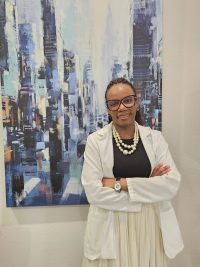
The virtual session, attended by Nigerians at home and abroad, featured Mr. Muyiwa Kayode, branding expert and author; Professor Babatunde Oke, Head of Finance Department at the University of Lagos; and Mr. James Aderoju, U.S.-based architect and public policy critic.
Creator and author, Muyiwa Kayode, kicked off on the position that Tinubu administration’s economic direction were unavoidable policies, particularly the “unpopular but necessary decisions” on fuel subsidy removal and exchange-rate unification. “The country is headed in the right direction,” he said, arguing that fuel availability and reduced arbitrage prove that reforms are taking hold.
But U.S.-based architect and public policy critic, James Aderoju, rejected that view, warning that Nigeria “has been moving in the wrong direction for a long time.” He accused leaders of being “not ready for prime time” and said that “90 to 95 percent” of Nigerians are worse off than three years ago. “The only thing getting better is the patience of Nigerians,” he said.
Head of Finance Department at the University of Lagos, Prof. Babatunde Oke presented a more sober reflection, saying there has been some healing, considering economic indices. Despite improvements, Oke warned that economic hardship remained widespread because of continued insecurity and weak policy cushioning.
According to him, inflation has eased from a peak of 34.6% to 16.05%; food inflation dropped from 39.9% to 13.2%; GDP growth rose to 4.23%; and oil output increased to 1.66 million barrels per day. However, he warned that rising debt and continued insecurity are undermining progress. “Foreign investors will not come where kidnapping is rampant,” he remarked.
Security drew unanimous criticism among panelists and the audience.
Muyiwa Kayode admitted the government is “not doing enough.” “Is the government doing enough on security? No, I don’t think so. This is critical because security affects everything – the economy, food security, investment.”
Prof. Oke cited poor intelligence coordination as the core security failure. He lamented the exodus of foreign companies, concluding that it hurts the economy. “Foreign investors will not come to a place with high insecurity and kidnapping,” he said. “The government appears helpless.
To James Aderoju, it wasn’t just about security issues, but the failure of leadership to communicate and connect with Nigerians. He insisted that the President must speak directly to Nigerians. “When your people are dying, you don’t only speak to foreigners. The Commander-in-Chief must address citizens to comfort them,” as he advised President Tinubu to cultivate the habit of visiting disaster areas and talk directly to Nigerians and connect emotionally with them when there is bad news, as other world leaders usually do.
Audience members were more charged up, accusing officials of negotiating with bandits and ignoring victims. “Security is non-existent! Government officials move around in convoys while everyday people are kidnapped and killed,” wrote one participant from the United Kingdom, Wale F.C. Another participant, Abiola R, said negotiations with bandits had become “a business model.”
The panel proposed wide-ranging reforms. Aderoju urged scrapping the Lagos-Calabar Coastal Highway and redirecting funds to rural roads and electrification, calling the project “the wrong big thing to build right now.” “Building big things is not the issue; building the wrong big things is. Nigeria must focus on what benefits the most people.”
Kayode disagreed, insisting the road is a “mega project” essential to Nigeria’s global positioning. According to the brand strategist, for Nigeria to be the giant of Africa, it must commit to doing things that are reflective of that positioning. “The Lagos-Calabar Road is a mega project, and 70% of it is private sector driven,” he said. “Nigeria must begin to do big things if we truly want to be a giant.”
Oke prioritized fixing insecurity, boosting healthcare and education, and achieving “zero importation” of refined petroleum.
Asked when Nigerians should expect real change, Kayode said vision plans must be simple enough to impact daily life. He explained that visionary plans fail because of poor articulation. “We don’t need another 1,500-page document like Vision 2010. A national vision should speak to the man on the street.”
In contrast, Prof. Oke attributed past failures to poor implementation and leaders “living large” despite low wages and suffering. “Leaders live large, importing expensive cars or building villas for the Vice President, while minimum wage is ignored. That is why visions fail.”
The forum closed with a reminder that Nigeria’s recovery depends on both leaders and citizens. “The purpose of government is the welfare and security of the people,” Oke said. “Until that is achieved, governance will remain broken.”
The moderator, former journalist, Chris Tunde Odediran, that Nigeria’s progress will ultimately depend on both leaders and citizens. “Whether Nigeria is getting better depends on evidence, accountability, and participation,” he said. “Good citizenship is the bedrock of good leadership.”