




BY NKECHI NAECHE-ESEZOBOR—The International Monetary Fund (IMF) has lowered Nigeria’s economic growth projection for 2026 to 4.1 percent as the economic consequences of the ongoing conflict in the Middle East continue to take a toll.
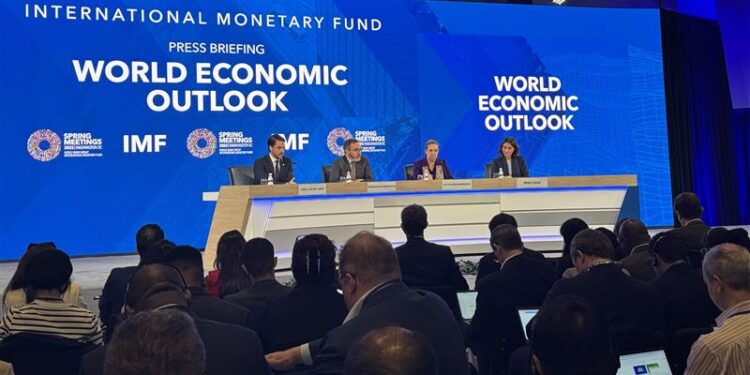
The updated forecast was revealed during the IMF and World Bank Spring Meetings held in Washington, D.C., where officials cautioned that energy and supply chain disruptions caused by the war are weakening economic recovery across the region.
IMF Chief Economist Pierre-Olivier Gourinchas explained that the downgrade highlights the wider challenges confronting countries that rely heavily on imported energy.
“For Sub-Saharan Africa, we are observing a downward revision in growth and a rise in inflation in several countries within the region,” Gourinchas stated. “The effects are largely consistent with what we are witnessing globally, particularly for nations that depend on energy imports.”
He further noted that the Fund is actively engaging with several countries to assess their needs under the current circumstances and is working closely with the International Energy Agency and the World Bank to address disruptions in the energy market.
Also speaking on the issue, Denz Igan, Chief of the IMF Research Department’s World Economic Studies Division, said the 0.3 percentage point reduction reflects multiple economic pressures.
“Higher costs of fuel and fertilizer caused by the war, along with increased shipping expenses, are expected to slow non-oil economic activities in Nigeria,” Igan said. “Although rising oil prices provide some support, the overall outlook points to slower growth in 2026, with a projected improvement in 2027.”
The IMF also forecasts that median inflation across Sub-Saharan Africa will increase from 3.4 percent in 2025 to 5 percent in 2026, driven by elevated oil and fertilizer prices, possible fuel supply shortages, and rising operational costs.
Regarding Nigeria, she emphasized that maintaining a tight monetary policy will be essential for meeting the inflation target set by the central bank.
Additionally, the IMF pointed out that bilateral aid to Sub-Saharan Africa declined by 16 to 20 percent in 2025, removing an important financial cushion at a time when commodity and shipping costs are surging.